
The Apprentice

The Apprentice

Aprendiz is a sculpture created by Jeronimo Su ñ ol, one of the most important Spanish sculptors of the late 19th century. This work is made of bronze and measures 43x26x26 centimeters. It was completed in Rome in 1874. Sunor's works transition from abstract neoclassicism to vivid realism, and he is famous for the "Contemplating Dante" at the Prado Museum and the Columbus Monument in Madrid (as well as its replica in Central Park, New York).
The stone lintel of the Lord God Vishnu

The stone lintel of the Lord God Vishnu

The portrait of this stone lintel is based on Buddhist legend, depicting the monarch god Vishnu holding a stick, wheels, lotus flowers, and conch shells. Produced in the 12th century AD, it is currently housed in the Minneapolis Museum of Art. His two companions stood on either side: Lakshmi holding a lotus flower, and Saraswati holding a stringed instrument. Vishnu's vehicle, the winged Garuda, appeared behind him, with 10 incarnations of Vishnu carved on top.
Roy Fuller

Roy Fuller

Roy Fuller "is a work of art from the 19th and 20th centuries, currently housed in the Minneapolis Museum of Art in the United States. This work is by a dancer named 'Roy Fuller'. Roy Fuller (1862-1928) was an American dancer, actor, and choreographer. She played a key role in the development of 'free dance', which was the predecessor of modern dance. She not only choreographed her own body movements, but also her silk costumes and patented stage lighting technology. Fuller received a warm welcome in Paris and became a part of the Art Nouveau movement, associated with symbolism.
Curly Mouse

Curly Mouse

The Curly Mouse is an artwork from the second half of the 19th century, currently housed in the Minneapolis Museum of Art in the United States. This artwork is a redwood sculpture shaped like a curled mouse. This piece is the work of Japanese woodcarver Masao Suzuki (1815-1890), known for his intricate details and vivid expressiveness.
Statues of buried figures, dancers

Statues of buried figures, dancers

This cultural relic is a painted pottery piece called "Statue of a buried figure, depicting a dancer performing", created between 618-906 AD. This statue is currently housed in the Minneapolis Museum of Art in the United States. The height of this statue is about 20 centimeters. Painted pottery and white talc were used as materials. This statue was bequeathed to the Minneapolis Museum of Art by Alfred F. Piersbury. This statue represents the top ceramic technology of China from the 7th to the 10th century.
Qing Dynasty Jade Carving Autumn Mountain Traveler

Qing Dynasty Jade Carving Autumn Mountain Traveler

In this mountain view, an official riding a donkey is followed by his attendant, holding an umbrella; They crossed a simple bridge over the waterfall. Above them, a smaller similar group seemed to be crossing another bridge in a distant place. This type of Yushan originated in the late Ming Dynasty. The characters, trees, bridges, and animals in the background represent the traditional translation of jade carving in orthodox landscape painting. In the paintings of this period, many similar depictions of scholars traveling or contemplating mountain scenery can be found. The theme of harmonious coexistence between humans and nature is favored by Taoists and literati. The sculpture is currently collected in
Burial figure statue pipa

Burial figure statue pipa

This cultural relic is a painted pottery piece called "Statue of a Buried Figure, depicting a musician playing", created between 618-906 AD. This statue is currently housed in the Minneapolis Museum of Art in the United States. The height of this statue is about 20 centimeters. Painted pottery and white talc were used as materials. This statue was bequeathed to the Minneapolis Museum of Art by Alfred F. Piersbury. This statue represents the top ceramic technology of China from the 7th to the 10th century.
Burial figures statue bamboo flute

Burial figures statue bamboo flute

This cultural relic is a painted pottery piece called "Statue of a Burial Figure, depicting a musician playing a bamboo flute", created between 618-906 AD. This statue is currently housed in the Minneapolis Museum of Art in the United States. The height of this statue is about 20 centimeters. Painted pottery and white talc were used as materials. This statue was bequeathed to the Minneapolis Museum of Art by Alfred F. Piersbury. This statue represents the top ceramic technology of China from the 7th to the 10th century.
Ancient stone tablet sculpture

Ancient stone tablet sculpture

It is a replica of an ancient stone tablet collected in the Louvre Museum in Paris, France. This replica is made of hand colored resin material by Rmn-PP (Louvre and Osay Museum Picture Agency), with dimensions of 106 centimeters high, 34 centimeters wide, and 33.5 centimeters thick. The surface with inscriptions is 35 centimeters high. The original material of the stone tablet is marble. The decoration of the stone tablet includes lotus leaves and inscriptions. There are inscriptions in Greek and Phoenician on it, which mention Hercules of Tyrian and offer a dedication to the gods.
Male Head Sculpture

Male Head Sculpture

It is the generic name for a series of paintings and sketches created by Pablo Picasso, which includes his various explorations and expressions of portraits. Pablo Picasso was a Spanish born artist and is considered one of the most influential artists of the 20th century, known for pioneering cubism and breaking traditional forms of two-dimensional representation. This work demonstrates his profound understanding of form and structure, as well as his unique ability to integrate different perspectives and elements into the same picture. These works often convey the spirit and emotional state of the characters through the combination of geometric shapes and innovative techniques.
Sculpture of the discus thrower

Sculpture of the discus thrower

It is a famous sculpture created by the ancient Greek sculptor Myron in the 5th century BC. Although the original work is lost, through replicas from the Roman period, we can glimpse the charm of this artistic masterpiece. This work depicts the moment when an athlete throws a discus, showcasing the perfect combination of strength and beauty. Athletes are naked, with clear muscle lines and leaning forward, in a tense and dynamic posture, reflecting ancient Greece's pursuit of human beauty and dynamic beauty. It is a model of ancient Greek sculpture art and has had a profound influence on artists in later generations.
Female idol sculptures in the Cyclades Islands
Female idol sculptures in the Cyclades Islands

The female idols of the Cyclades Islands, also known as "Cycladic idols," are a series of marble sculptures made on the Cyclades Islands in the Aegean Sea during the early Bronze Age from 3000 BC to 2000 BC. Known for its simple geometric shapes and highly abstract style, it is typically depicted as a standing female figure with feet together, arms crossed in front of the chest, an oval shaped head, simplified facial details, and usually only the nose protruding. Collected in museums around the world, including the Louvre in Paris, they are an important part of ancient art and cultural heritage, as well as important physical evidence for studying ancient Aegean civilization.
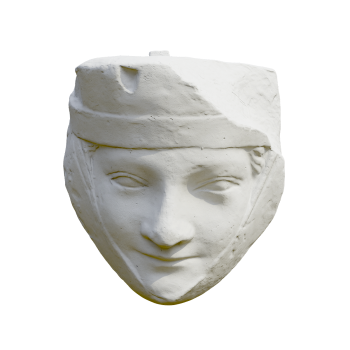
Female Head Sculpture

Female Head Sculpture

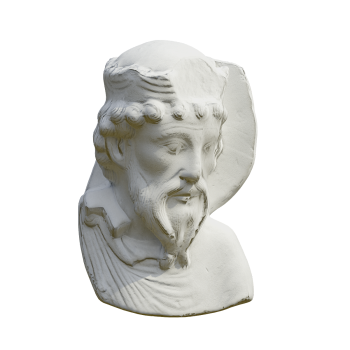
The female portrait (T ê tef é minine) is a replica of a sculpture collected at the Cath é drale Notre Dame de Reims in France. This replica is made of plaster material by Rmn-P (Louvre and Osay Museum Photo Society) and is a three-dimensional reproduction of the original sculpture. Originally part of sculptural art, it may have originated from a specific historical or cultural background, showcasing the facial features and expressions of women.
Old Father Thames Old Father

Old Father Thames Old Father

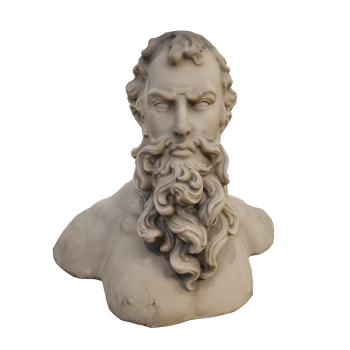
Old Father Thames refers to the River Thames, which is one of the most famous rivers in England and also one of the most important waterways in the country. It originated in the village of Hampstead in central England, then crossed London and finally flowed into the English Channel. The River Thames holds an important position in British history, culture, and literature. It is described as the 'Old Father of the Thames', symbolizing the soul and spirit of England. It holds an important position in the history, culture, and tourism of the UK, providing people with beautiful scenery, diverse activities, and unique experiences.
Discoboluslancellotti discus thrower ancient Greek statue

Discoboluslancellotti discus thrower ancient Greek statue

Discobolus lancellotti is an ancient Greek statue depicting an athlete throwing a discus. This statue is believed to have been replicated based on the work of the ancient Greek sculptor Mirto, 'The discus thrower'. A young athlete was showcased, elegantly poised to throw a discus. The body lines and muscles of the statue are accurately sculpted, showcasing the release of his power and the dynamics of his movements. This statue is renowned for its exquisite artistic skills and accurate expression of human proportions. It is one of the important representatives of ancient Greek sculpture art.
Woodcarving of Guan Yu, the figure of the Three Kingdoms

Woodcarving of Guan Yu, the figure of the Three Kingdoms

Guan Yu, also known as Yunchang, was a famous general of the Shu Kingdom at the end of the Han Dynasty. He was the adopted brother of Liu Bei and one of the highly respected heroic figures in Chinese history. He played an important role in the late Eastern Han Dynasty and the Three Kingdoms period. A tall and imposing figure is revered as' Guan Gong '. He is known for his loyalty, integrity, and bravery, and is the backbone of Liu Bei's power. Guan Yu was born in Jie County, Hedong Commandery. In his early years, he held positions in the government and became sworn brothers with Liu Bei. He demonstrated outstanding martial arts and military talent in many battles, especially winning reputation for defeating the great general Xiahou Dun of Cao Cao. His image has been widely praised by later generations and has become a symbol of loyalty and bravery
Bust of Wojciech Brzeja

Bust of Wojciech Brzeja

El Descendimiento, National Museum of Fine Arts in Santiago, Chile

El Descendimiento, National Museum of Fine Arts in Santiago, Chile

El Descendimiento is a famous sculpture depicting the scene of Jesus Christ being taken off the cross. This statue is usually made of marble or other materials, vividly depicting the scene of Jesus' body being carefully removed from the cross by several people. Jesus' body showed pain and exhaustion, his head tilted forward, his eyes tightly closed, and his expression solemn. Other figures in the statue include the Virgin Mary, the mother of Jesus, Saint Joseph, and several other followers. Their expressions and postures expressed respect for the pain and sadness of Jesus.
Saint Catherine and Roman Inscriptions Sculpture

Saint Catherine and Roman Inscriptions Sculpture

The sculpture 'St. Catherine and the Roman Inscriptions' is a work of sculpture with historical and religious significance. It depicts Saint Catherine, a Christian saint who was beheaded and martyred during the Roman Empire era. In addition to depicting the image of Saint Catherine, this sculpture also incorporates a pedestal engraved with Roman inscriptions. This Roman inscription may be a commemoration of the martyrdom of saints or a description of historical events in ancient Rome. This detail makes the sculpture more rich and interesting. It not only showcases the artist's techniques for depicting character images, but also provides viewers with reflections and understanding of historical events and religious beliefs.
DamadeElche's Women's Sculpture in Ilche

DamadeElche's Women's Sculpture in Ilche

DamadeElche (Lady of Ilche) is an ancient sculpture discovered at the Ilche archaeological site in Spain. This sculpture was discovered in an ancient tomb in Ilche, Spain in 1897 and is considered one of the masterpieces of the ancient civilization of the Iberian Peninsula. A gorgeous and mysterious female figure, wearing complex headwear and elaborate decorations. Her facial expression is solemn and mysterious, displaying a majestic and solemn atmosphere. The high delicacy and artistic quality of this sculpture make it a world-renowned work of art. It showcases the unique charm and artistic achievements of ancient Iberian civilization.
Eight Immortals Crossing the Sea Han Zhong Li Clay Carving Ornament

Eight Immortals Crossing the Sea Han Zhong Li Clay Carving Ornament

The Eight Immortals Crossing the Sea by Han Zhongli "is an ancient Chinese legend that tells the story of the Eight Immortals embarking on a cross sea adventure to help Han Zhongli search for immortal grass. The Eight Immortals are Han Xiangzi, Tie Guai Li, Cao Guojiu, Zhang Guolao, He Xiangu, Lv Dongbin, Lan Caihe, and Fairy Sister. They each have unique immortal skills and talents, and through cooperation, they overcame numerous difficulties and helped Han Zhongli successfully find the immortal grass. This story inherits the values of friendship, courage, and teamwork in ancient Chinese culture, and the image of the Eight Immortals crossing the sea has become one of the well-known figures in Chinese culture, often quoted and praised by people.
Chinese Classical Golden Boy and Jade Girl Clay Sculpture - Child Girl
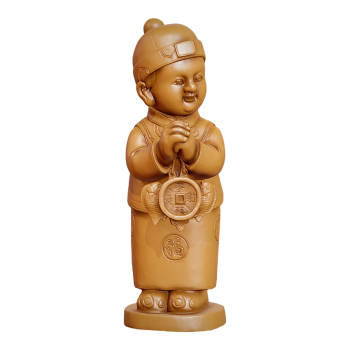
Chinese Classical Golden Boy and Jade Girl Clay Sculpture - Child Girl

Chinese Classical Golden Boy and Jade Girl Clay Sculpture - Boy Boy

Chinese Classical Golden Boy and Jade Girl Clay Sculpture - Boy Boy

The sculpture "Aphrodite" from the ancient Roman Empire period

The sculpture "Aphrodite" from the ancient Roman Empire period

Aphrodite, also known as Aphrodite in Greek, is the goddess of love and beauty in ancient Greek mythology. She is also the goddess of sexuality and one of the twelve Olympian gods. Because it was born in the ocean, it is sometimes revered as a patron saint for navigation. Aphrodite was born on the waves of the sea, with porcelain like skin, blonde hair and blue eyes, and the perfect figure and appearance of ancient Greek women, symbolizing the beauty of women and considered the highest symbol of female physical beauty. It is currently housed in the Capitoline Museum.